Gas Line Repair & Inspection in Kew Gardens, Queens
Specialized gas piping repair, pressure decay integrity testing, NYC Local Law 152 periodic inspections, and appliance connections executed under rigorous New York City safety standards.
If you smell natural gas (a rotten-egg sulfur odor) or suspect an active gas leak:
- Leave the building immediately.
- Do NOT operate electrical switches, light fixtures, doorbells, or phones inside the structure.
- Do NOT light matches or create open flames.
- Once safely outdoors and away from the building, dial 911 or call National Grid's gas emergency line at 1-718-643-4050 immediately.
- Do not attempt DIY gas repairs or re-enter the property until emergency personnel declare it safe.
Qualified Gas Piping Services in Kew Gardens
Natural gas systems deliver fuel to heating boilers, water heaters, and kitchen ranges across residential cooperatives and single-family properties in Kew Gardens. Because gas operates under constant pressure within threaded black iron piping, any joint deterioration, accidental mechanical impact, or unpermitted alteration poses extreme safety hazards.
Our qualified team handles planned gas line repair Kew Gardens Queens projects, utility shut-off restorations, and certified gas piping inspection Kew Gardens Queens mandates. Whether coordinating a safe gas line installation for stove Kew Gardens Queens kitchens require or conducting pressure tests after utility service interruptions, all work complies with NYC Department of Buildings (DOB) technical codes.
NYC Local Law 152 Gas Piping Inspections
Under NYC Local Law 152, owners of all buildings except one- and two-family private homes (occupancy group R-3) must have their exposed gas piping inspected once every four years by a licensed master plumber or a qualified inspector working under direct supervision.
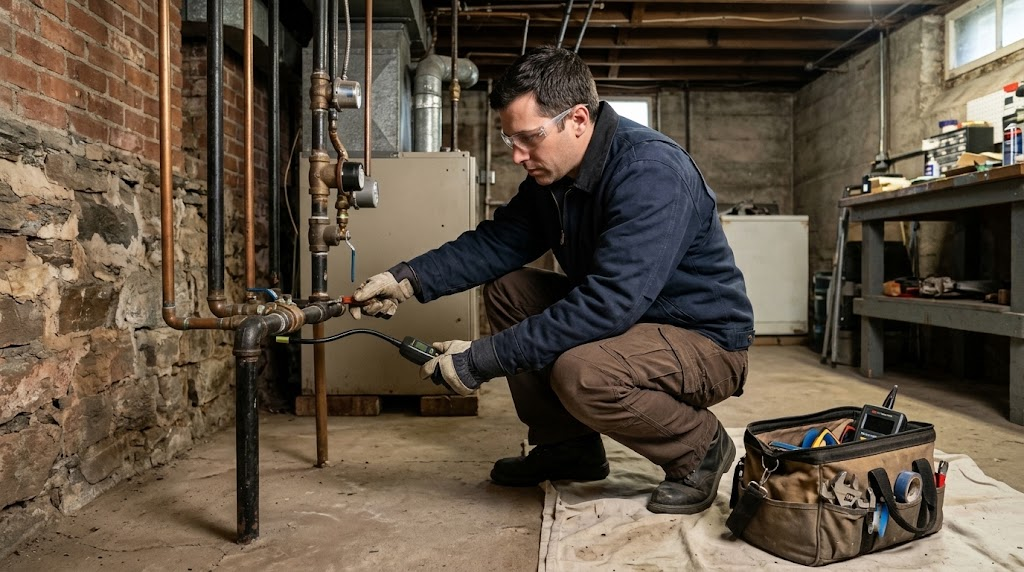
During a Local Law 152 inspection in Kew Gardens, inspectors examine exposed gas piping from the building point of entry, meter banks, boiler rooms, and common corridors up to tenant spaces. We check for visible corrosion, illegal flexible hose connections, improper pipe hangers, and test for combustible gas leaks using electronic gas detectors. Any non-hazardous issues are documented in a formal report so owners can make certified repairs before city filing deadlines.
For heating equipment fueled by natural gas lines, learn more about our boiler repair and domestic water heater repair services, or explore broader plumbing diagnostic options on our pipe leak repair page.
Frequently Asked Questions About Gas Lines
Evacuate the premises immediately without operating light switches, electrical breakers, or phones inside the structure. From a safe location outdoors, dial 911 or contact National Grid's gas emergency line immediately. Do not attempt DIY repairs.
NYC Local Law 152 mandates periodic inspection of exposed gas piping systems in all buildings except one- or two-family private homes (occupancy group R-3). Inspections must be conducted by a licensed master plumber or qualified individual once every four years based on community district schedules.
Yes. Where authorized and permitted under NYC Department of Buildings (DOB) regulations, qualified plumbers can run black iron piping, install approved shutoff valves, and perform mercury-free pressure drop tests before appliance connection.
Technicians pressurize the isolated gas line with dry air or nitrogen and attach a calibrated pressure gauge or manometer. The system must hold constant pressure over a mandated time interval without decay to verify 100% leak-free integrity.
To review our service territory across Forest Hills, Richmond Hill, and Briarwood, check our Service Areas page or contact our team via the Contact page.